


 Schedule Online
 Online Estimate




Why Is My Sump Pump Running Constantly? What Minnesota Homeowners Should Know
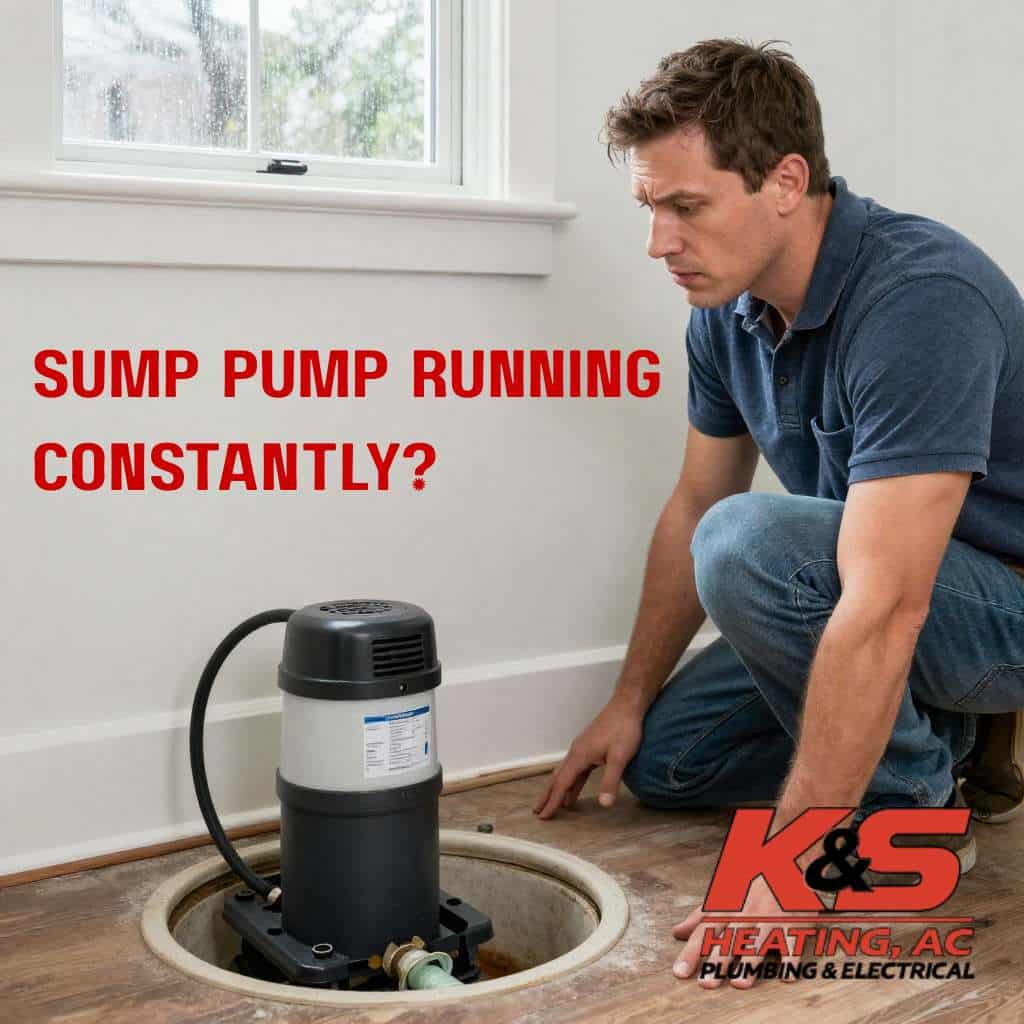
You hear it kick on.
Then a few minutes later, you hear it again.
And again.
And again.
If your sump pump seems to be running nonstop, it’s natural to wonder if something is wrong.
After all, most homeowners don’t spend much time thinking about their sump pump until there’s a problem.
The good news is that a sump pump running frequently does not always mean you need a repair. Sometimes it’s simply doing its job. Other times, it can be a warning sign that something needs attention before it leads to water damage or a flooded basement.
For homeowners in Rochester, Owatonna, Austin, and surrounding Southeast Minnesota communities, spring and early summer often bring heavy rain and saturated soil. That means sump pumps are working harder than they do during other times of the year.
Let’s look at why your sump pump may be running constantly and when it’s time to call a professional.
First, What Does a Sump Pump Actually Do?
Your sump pump is designed to move water away from your home’s foundation.
As groundwater builds up around your home, it flows into a sump pit. Once the water reaches a certain level, the pump activates and pushes the water away from your house through a discharge pipe.
Without a properly functioning sump pump, that water could end up in your basement.
In a state like Minnesota, where spring rains and snowmelt can saturate the ground, sump pumps play an important role in protecting homes from water damage.
Sometimes a Frequently Running Sump Pump Is Normal
Let’s start with the good news.
If you’ve recently experienced:
- Heavy rainfall
- Several days of wet weather
- Rapid snowmelt
- Saturated ground conditions
your sump pump may simply be doing exactly what it was designed to do.
When the water table rises, more groundwater collects around your foundation. That means the pump has to cycle more frequently to keep your basement dry.
If the pump stops running once the ground dries out, there may be no problem at all.
The Float Switch May Be Stuck
One of the most common sump pump issues involves the float switch.
The float works much like the float inside a toilet tank. As water rises, the float rises with it. Once it reaches a certain level, it tells the pump to turn on.
If the float becomes:
- Stuck
- Obstructed
- Tangled
- Damaged
the pump may continue running when it doesn’t need to.
Sometimes homeowners accidentally shift the float while storing items near the sump pit.
A quick visual inspection may reveal the problem.
Your Discharge Line Could Be Blocked
The discharge line carries water away from your home.
If that line becomes blocked, the pump may continue cycling because water isn’t being discharged properly.
Common causes include:
- Dirt buildup
- Debris
- Animal nests
- Pipe damage
In some cases, water may actually flow back toward the sump pit, causing the pump to run repeatedly.
A blocked discharge line can also place unnecessary strain on the system and shorten its lifespan.
The Check Valve May Have Failed
Most sump pump systems include a check valve.
Its job is simple.
It prevents water from flowing backward into the sump pit after the pump shuts off.
When a check valve fails, water can return to the pit immediately after being pumped out.
The result?
The pump turns on again.
And again.
And again.
This can make it seem like the sump pump never stops running.
Fortunately, this issue is often relatively straightforward to diagnose and repair.
Your Pump May Be Too Small for the Job
Not all sump pumps are created equal.
If your home experiences significant groundwater intrusion, an undersized sump pump may struggle to keep up.
The pump may run almost constantly because it’s operating at its maximum capacity.
This is especially common in homes where:
- Basement drainage needs have changed
- Home additions have been made
- Groundwater conditions have increased over time
A professional evaluation can determine whether your current pump is properly sized for your home’s needs.
The Pump Could Be Wearing Out
Like any mechanical system, sump pumps don’t last forever.
Most sump pumps have an average lifespan of about 7 to 10 years, depending on usage and maintenance.
As components begin to wear down, you may notice:
- Longer run times
- Strange noises
- Reduced performance
- Frequent cycling
If your sump pump is approaching the end of its lifespan, replacement may be more cost-effective than repeated repairs.
Warning Signs Your Sump Pump May Be Failing
A constantly running sump pump is not the only warning sign to watch for.
Pay attention if you notice:
Unusual Noises
Grinding, rattling, or vibrating sounds can indicate mechanical problems.
Visible Rust
Corrosion can affect performance and reliability.
Frequent Short Cycling
If the pump turns on and off every few seconds, there may be an issue with the float switch or water flow.
Water in the Basement
This is the biggest red flag of all.
If water is accumulating despite the pump running, immediate attention is needed.
Why This Matters for Minnesota Homeowners
In Southeast Minnesota, weather conditions can change quickly.
A sump pump that struggles during a light rainstorm may completely fail during a major summer storm.
That’s why it’s important to address potential issues before severe weather arrives.
Many homeowners don’t discover a sump pump problem until water starts appearing on the basement floor.
By then, the damage may already be done.
A little preventative attention now can help avoid a much bigger headache later.
How to Help Your Sump Pump Last Longer
There are several simple steps homeowners can take to improve sump pump performance.
Test the Pump Periodically
Pour a bucket of water into the sump pit and make sure the pump activates properly.
Keep the Pit Clean
Remove debris that could interfere with the float switch.
Inspect the Discharge Line
Check for visible obstructions or damage.
Schedule Routine Maintenance
Professional inspections can identify small problems before they become major repairs.
When Should You Call a Professional?
If your sump pump:
- Runs constantly without recent rainfall
- Makes unusual noises
- Fails to keep the basement dry
- Appears to be short cycling
- Is more than 7 to 10 years old
it’s a good idea to have it inspected.
The sooner a problem is identified, the easier it is to prevent water damage and costly repairs.
Final Thoughts
A sump pump that runs frequently isn’t always cause for concern.
Sometimes it’s simply protecting your home exactly as intended.
However, if it seems like the pump never shuts off, it’s worth taking a closer look.
Issues like a stuck float switch, blocked discharge line, failing check valve, or aging equipment can all lead to excessive run times.
At K&S Heating, Air Conditioning, Plumbing & Electrical, we help homeowners throughout Rochester, Owatonna, Austin, and surrounding Southeast Minnesota communities keep their plumbing systems operating reliably year-round.
If your sump pump is running constantly or you’re concerned about its performance, our team can inspect the system, identify the cause, and recommend the best solution to protect your home.
Frequently Asked Questions
Is it normal for a sump pump to run every few minutes?
It can be normal during periods of heavy rainfall or saturated ground conditions. If it continues after the weather dries out, it may indicate a problem.
How long should a sump pump last?
Most sump pumps last between 7 and 10 years, though lifespan depends on usage and maintenance.
Why does my sump pump keep turning on and off?
This may be caused by a faulty float switch, failed check valve, or water flowing back into the pit.
Can I test my sump pump myself?
Yes. Carefully pour water into the sump pit and verify that the pump activates and removes the water properly.
What happens if my sump pump fails during a storm?
A failed sump pump can allow water to accumulate around your foundation and potentially flood your basement.
