


 Schedule Online
 Online Estimate




What to Do During a Power Outage: A Storm Prep Checklist for Southeast Minnesota Homeowners
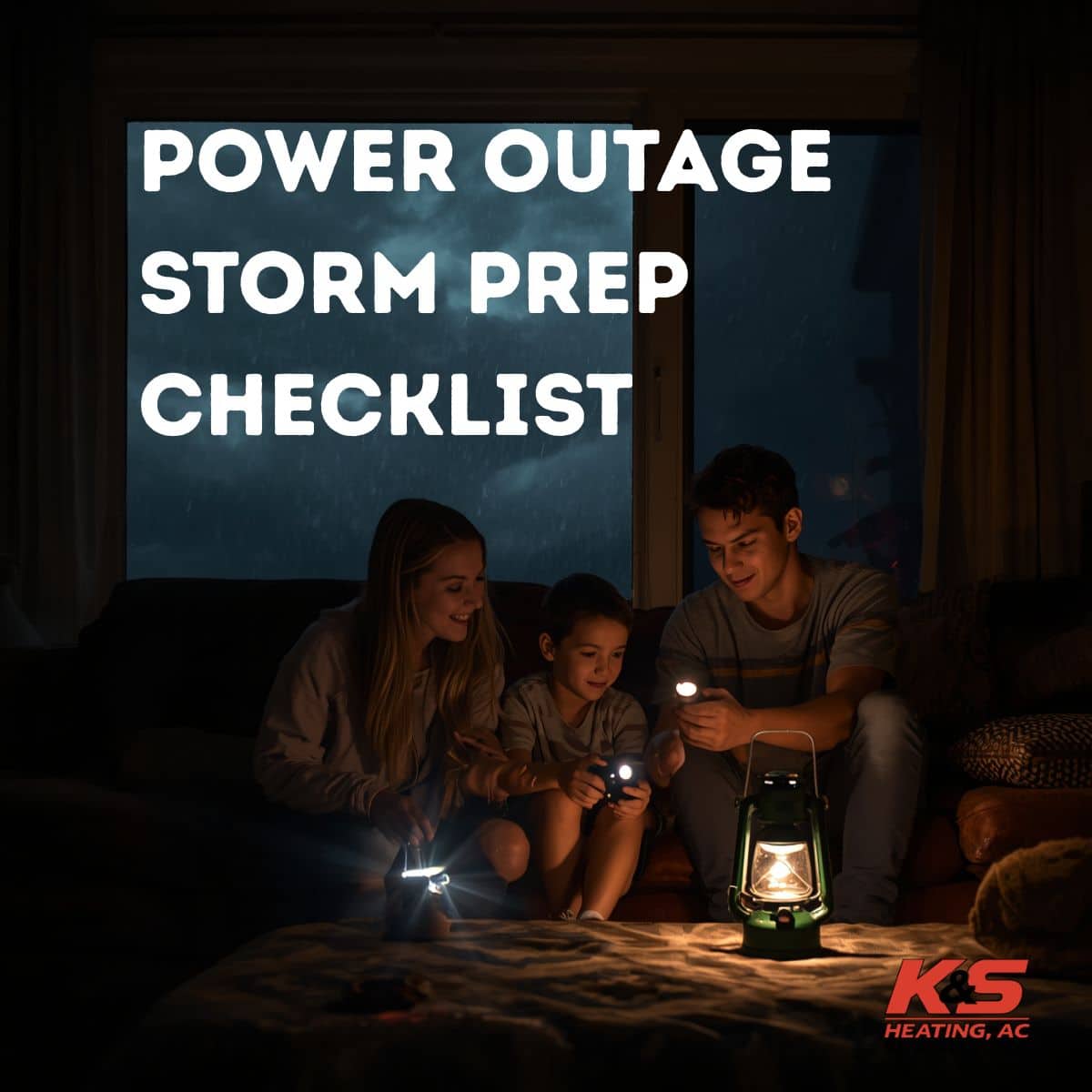
August in Southeast Minnesota means one thing for sure. Storms. Big ones. The kind that roll in fast, knock out power for hours, and leave you scrambling in the dark wondering what to do next.
If you’ve lived in Rochester, Byron, Owatonna, or Austin for more than a summer or two, you know the drill. The sky turns that strange greenish color. The wind picks up. And then, click. The power’s gone.
At K&S Heating, Air Conditioning, Plumbing & Electrical, we’ve helped plenty of families through outages over the years. Here’s what you actually need to know, before the next storm hits.
Before the Storm: Get Ready Now
Waiting until the sky turns dark to prepare is a rookie move. Do this stuff now, while the sun’s still shining.
Charge your devices. Phones, laptops, battery packs. Keep them topped off during storm season. You never know when you’ll need them.
Stock up on flashlights and batteries. Skip the candles if you can. They’re a fire risk, especially with kids or pets running around a dark house.
Know where your breaker panel is. Sounds simple. But when the power’s out and you’re stressed, you don’t want to be hunting around your basement with a phone flashlight trying to find it.
Keep a cooler and some ice packs handy. If the outage stretches past a few hours, you’ll want a way to keep essentials cold without opening the fridge every five minutes.
During the Outage: What Actually Matters
Power’s out. Now what? Here’s your game plan.
Keep the Fridge Closed
Every time you open that door, cold air escapes. A full fridge stays cold for about four hours if you leave it shut. A full freezer can hold for 48 hours. Resist the urge to peek.
Unplug Sensitive Electronics
When the power comes back on, it doesn’t always come back gently. Surges happen. Protect your TV, computer, and anything else you’d hate to replace by unplugging it during the outage.
Check on Neighbors, Especially Older Ones
Keep in mind, outages hit some folks harder than others. If you’ve got elderly neighbors, or anyone relying on medical equipment, a quick check-in goes a long way.
Watch for Downed Power Lines
If a storm knocked down a line near your house, stay away. Don’t touch it, don’t drive over it, don’t let curious kids get anywhere close. Call your utility company right away.
Listen for Strange Sounds When Power Returns
When electricity kicks back on, pay attention. Buzzing, crackling, or a burning smell coming from an outlet or panel isn’t normal. That’s a sign something got damaged during the surge, and it’s worth a call to a licensed electrician before it becomes a bigger problem.
What About Your Home’s Comfort?
An outage during an August heat wave isn’t just inconvenient. It’s genuinely uncomfortable, and for some households, it’s a real safety concern. Without AC running, indoor temperatures climb fast, especially in homes with a lot of south-facing windows.
If outages seem to hit your neighborhood more than others, or if you’ve noticed your home’s electrical system seems shaky even without a storm, that’s worth looking into. A whole home generator can be a smart investment for Southeast Minnesota families who deal with frequent outages, keeping your AC, fridge, and essentials running no matter what the sky throws at you.
Building a Storm Kit That Actually Works
A lot of folks think they have a storm kit ready, until the power actually goes out and they realize half of it is missing or expired. Take a few minutes this week to actually check yours.
Bottled water. Aim for at least a gallon per person if the outage stretches past a day. A battery powered or hand crank radio. Cell towers can get overwhelmed during big storms, and a radio keeps you connected to local updates even when your phone signal is spotty. Basic first aid supplies. Nothing fancy, just the essentials. A backup phone charger that doesn’t need to be plugged in. These are cheap and worth every penny during a multi-day outage.
Keep this stuff somewhere easy to grab. Not buried in the back of a closet you haven’t opened since last spring.
After the Storm Passes
Once the power’s back and the storm’s cleared out, take a walk around your property. Look for any exposed wiring, damaged outlets, or anything that looks off. If your breaker keeps tripping after the storm, or you notice flickering lights that weren’t there before, don’t ignore it. That’s your electrical system telling you it needs a look.
We’re Here When the Power Isn’t
Storm season in Southeast Minnesota isn’t going anywhere, and neither are we. Whether you need a generator installed before the next big storm, an electrical inspection after one rolls through, or just some honest advice about keeping your family safe and comfortable, K&S Heating, Air Conditioning, Plumbing & Electrical has your back.
Give us a call or visit ksheating.com to talk through your storm prep options today. A little planning now beats scrambling in the dark later.
